Welcome!
Research Motor Neurone (RMN) is a charitable organisation based in Trinity College Dublin founded in 2007. The purpose of the Foundation is to support research in Motor Neurone Disease (MND), also known as Amyotrophic Lateral Sclerosis (ALS) undertaken by Trinity’s MND research group. RMN also strives to increase awareness of this incurable disease at both a national and international level.
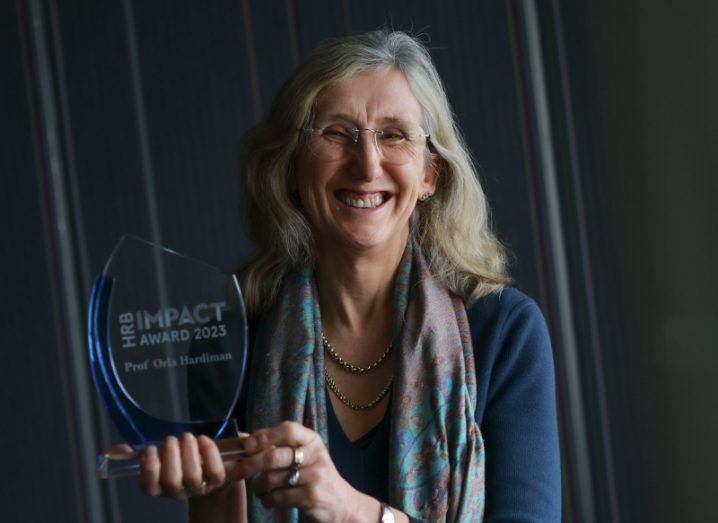
MND research in Ireland is led by Orla Hardiman, Professor of Neurology at Trinity College Dublin and a world authority on MND and related neurodegeneration. Professor Hardiman is also the Health Service Executive (HSE) National Clinical Lead for Neurology. Ongoing research is needed to discover the cause, treatment and methods of improving quality of life for MND sufferers and their families.
The generous support from our donors helps us make progress in finding ways to help those who suffer from this debilitating condition. It is through the fundraising endeavours of all our sponsors that essential funds are raised to support RMN and our ongoing vital research. Thank you all for your kindness and continued support.
Read our 2023 Newsletter for an overview of key events and research involving RMN over the last 12 months.
If you are interested in making a donation please click on the below link to donate directly and safely via credit card or to set up your own fundraising
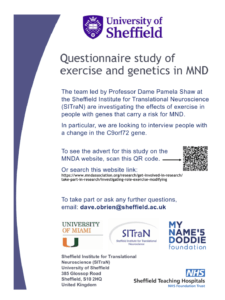
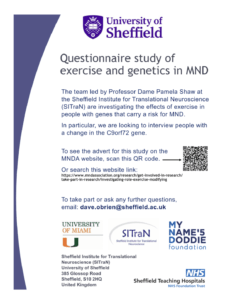
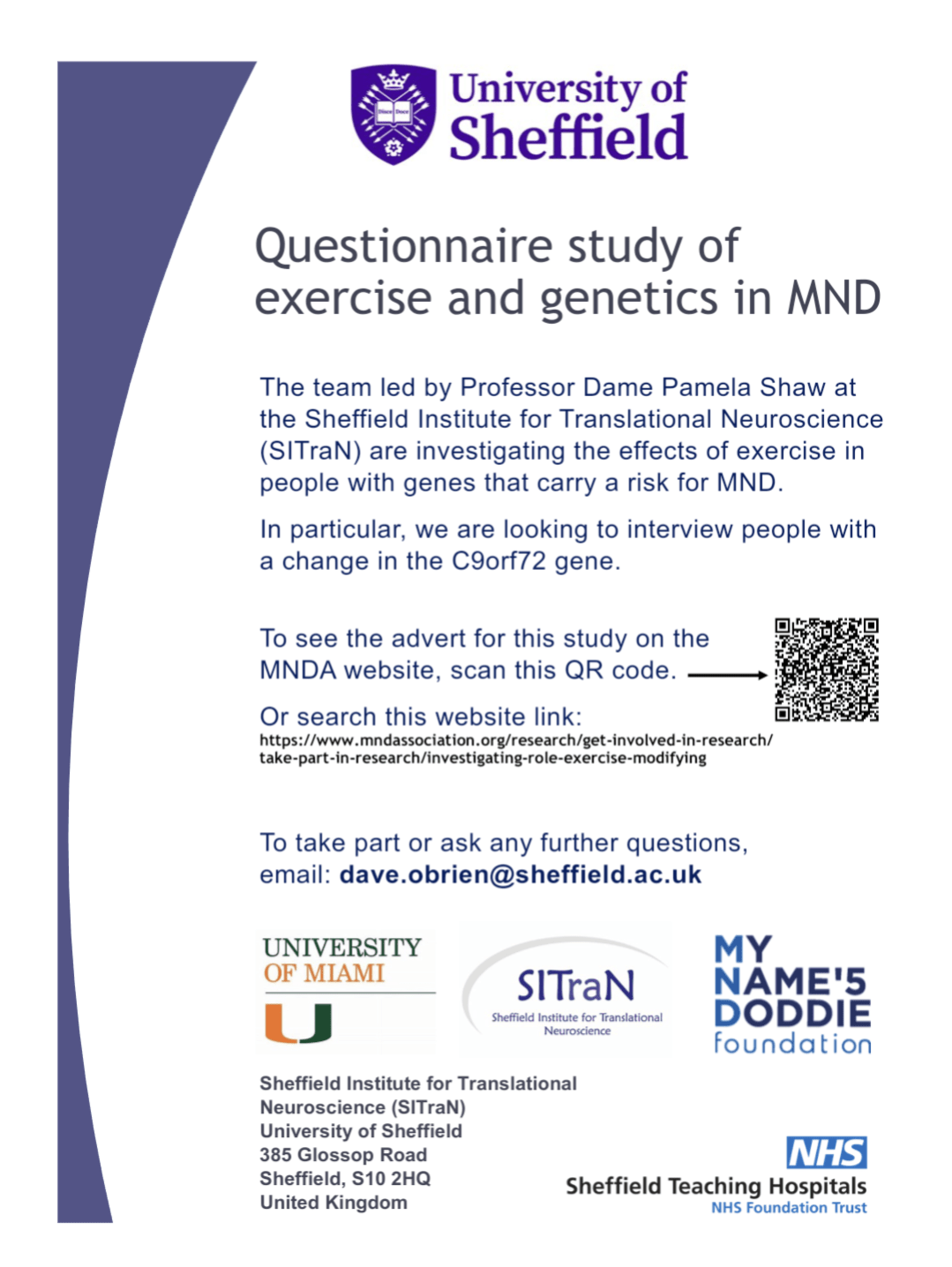
Participants wanted for questionnaire study of exercise and genetics in MND
Investigating the role of exercise in modifying neurodegeneration related to MND
The team led by Professor Dame Pamela Shaw at the Sheffield Institute for Translational Neuroscience (SITraN) are investigating the effects of exercise in people with genes that carry a risk for MND. In particular, they are looking to interview people with a change in the C9orf72 gene to learn more about the relationship between the genetic and environmental (non-genetic) risk factors that lead to MND.
The aim of this study is to further the understanding of the exact causes of MND. In particular, it looks at how lifestyle factors interact with risk genes like C9orf72 to cause MND.
Over three years, the study team aim to recruit approximately 50-100 people with MND who have a C9orf72 mutation, and a further 100-200 family members who have tested positive for the C9orf72 gene but do not have symptoms of MND.
It is hoped that the study will enable researchers to learn more about the relationship between the genetic and environmental (non-genetic) risk factors that lead to MND. This will also allow them to develop personalised medicine interventions, potential preventative strategies and provide guidance to genetically at-risk families.
Creating the Future: Prof Orla Hardiman on tackling motor neurone disease
In the first interview in a series profiling Ireland’s research leaders, Professor Orla Hardiman speaks to Ann O’Dea, CEO and co-founder of Silicon Republic about a life dedicated to improving the lives of those with motor neurone disease and as a clinician, researcher and research leader, and what led her to become Ireland’s leading authority in neurology.
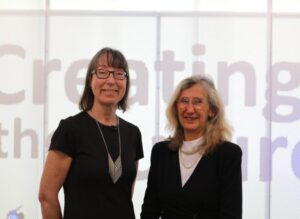
Ann O’Dea and Prof Orla Hardiman. Image: © Connor McKenna/SiliconRepublic.com

Fundraising
If you want to know how to donate or be part of an event, click the button below. There you will also find our fundraising blog!
Beaumont MND Clinic
Our Specialists in Physiotherapy, Occupational Therapy, Speech and Language Therapy and Nutrition, and we have access to Respiratory Medicine and …
Research
Information about the latest research, research resources and our research blog can be found if you click on the button below!
The Clinical Team
The Clinical Team consists of many people with different knowledge. A neurologist, social workers, therapists, and more who do their best for the patients.
Covid-19 and MND
To make sure that people with MND continue to receive excellent care, our clinical and research doctors at TCD, along with …
Telehealth in MND
TiM stands for Telehealth in Motor Neuron Disease. The TiM platform is a system hosted on the application, MyPathway, through which people living with MND…
Charity Number: CHY 17822
Registered Charity Number: 20067076
For further information on how to donate click here.
FOLLOW US ON TWITTER
LIKE US ON FACEBOOK